09 — Meet the Researcher
Vibhav Goel
A high-school student at Delhi Public School Sector 45, Gurgaon, with a curiosity for how economies shape lives — and a belief that the right question matters more than the easy answer.
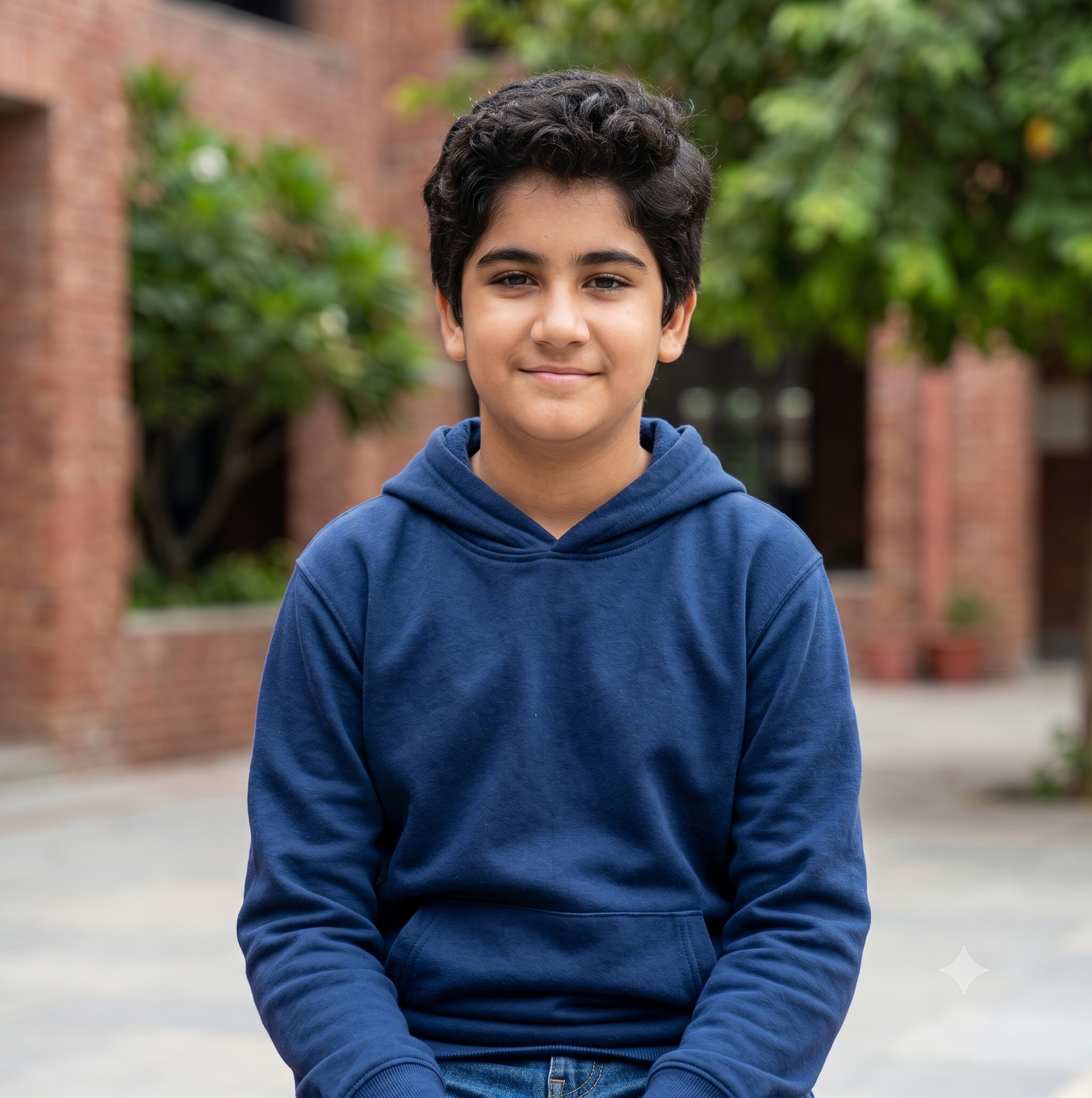
"I don't just study economics — I try to ask better questions about it, and then build things that help others ask them too."
The Story
What inspired this research
It started with a simple observation. Two children, born on the same day, in two different countries — one in Norway, one in South Africa — face income distributions that barely overlap. One is statistically likely to attend university, earn a stable income, and own a home. The other is statistically likely to face poverty, limited schooling, and precarious employment.
The difference is not effort. It is structure. And structure is the product of policy, history, and collective choice. That realisation sent me down a path through the work of Raj Chetty, Thomas Piketty, the OECD social mobility team, and the World Inequality Lab — trying to understand not just that opportunity is unequal, but why, and what can be done about it.
This project is my attempt to make that journey interactive. Not a textbook, not a dashboard — a space where a visitor can explore, compare, simulate, and question the data for themselves.
The Why
Why Economics?
It explains the world
Economics is the language of incentives, trade-offs, and systems. Understanding it means understanding why societies look the way they do.
It asks the big questions
What is fair? What is efficient? Can we have both? Economics forces you to confront trade-offs that shape real lives.
It is a tool for change
Good policy begins with good analysis. Economics, done honestly, is one of the most powerful tools for improving human welfare.
What I Learned
Ideas explored through this project
Reading evidence
Finding the main ideas in economic research
Comparing countries
Looking at patterns across countries and time
Explaining ideas
Turning complex questions into clear stories
Asking better questions
Connecting evidence to everyday experiences
The Journey
Research timeline
The Question
Encountered the Great Gatsby Curve and the work of Raj Chetty. The question crystallised: does birth determine destiny?
The Data
Compiled a 30-country dataset from World Bank, UNDP, OECD, and WID. Learned to clean, structure, and cross-reference public data.
Making the ideas clear
Compared countries in ways that make the patterns easy to see and connect to everyday life.
Exploring choices
Created a simple policy activity with eight choices and four outcomes to show why structure matters.
Sharing the research
Brought the findings together in one welcoming place with stories, comparisons, and a research library.
Interests
What fascinates me in economics
Reading List
Favourite economics books
Capital in the Twenty-First Century
Thomas Piketty
For showing that inequality has a history — and a future.
The Price of Inequality
Joseph Stiglitz
For arguing that inequality is a choice, not a law of nature.
Giving Kids a Fair Chance
James Heckman
For the evidence that early investment compounds over a lifetime.
The Great Escape
Angus Deaton
For the tension between progress and the people left behind.
The Road Ahead
Future academic aspirations
I hope to study Economics and Finance at a research-intensive university, where I can deepen my understanding of econometric methods and apply them to questions of inequality, mobility, and development.
Beyond coursework, I want to keep sharing ideas that make complex economic questions accessible. I believe the best research does not sit in journals; it reaches people, changes minds, and informs policy.
Get in touch
Let's talk about economics, data, or this project.
I'm always happy to discuss the research, the methodology, or the ideas behind Wealth Mobility Lab. Reach out anytime.
"The arc of the moral universe is long, but it bends toward justice — only if we are willing to do the bending."
— adapted from Theodore Parker, a favourite of this project